Professional Laminate Flooring Installation in Massachusetts
Laminate flooring updates a room faster and cheaper than any other floor upgrade. The product looks like hardwood, handles foot traffic well, and goes down as a floating floor without nails or glue. Most rooms can swap from old carpet or tired vinyl to brand new laminate in one to two days. We install in living rooms, dining rooms, bedrooms, hallways, basements, and rec rooms. Every job starts with a flat subfloor and ends with clean transitions at every doorway.
Carlos Maldonado walks the space before the quote goes out. He checks the existing floor, measures each room, and looks at the doorways and stair transitions. The written quote lists square footage, underlayment grade, transition strips, baseboard handling, and the timeline. Materials come from Home Depot stock or special order, depending on the plank color and grade you pick. We can also work with product you buy yourself if you prefer to source the planks separately.
Massachusetts homes have their own issues for laminate floor work. Subfloors that slope an inch from one wall to another. Plywood with squeaks at every step. Old hardwood that has gone soft in spots from leaks. Concrete basement slabs with high moisture readings. We test moisture, level the subfloor, and address squeaks before the first plank goes down. Cutting these steps is why most laminate jobs fail within two years. We do the prep right so the floor holds for the long run.
New Laminate Floor Installation
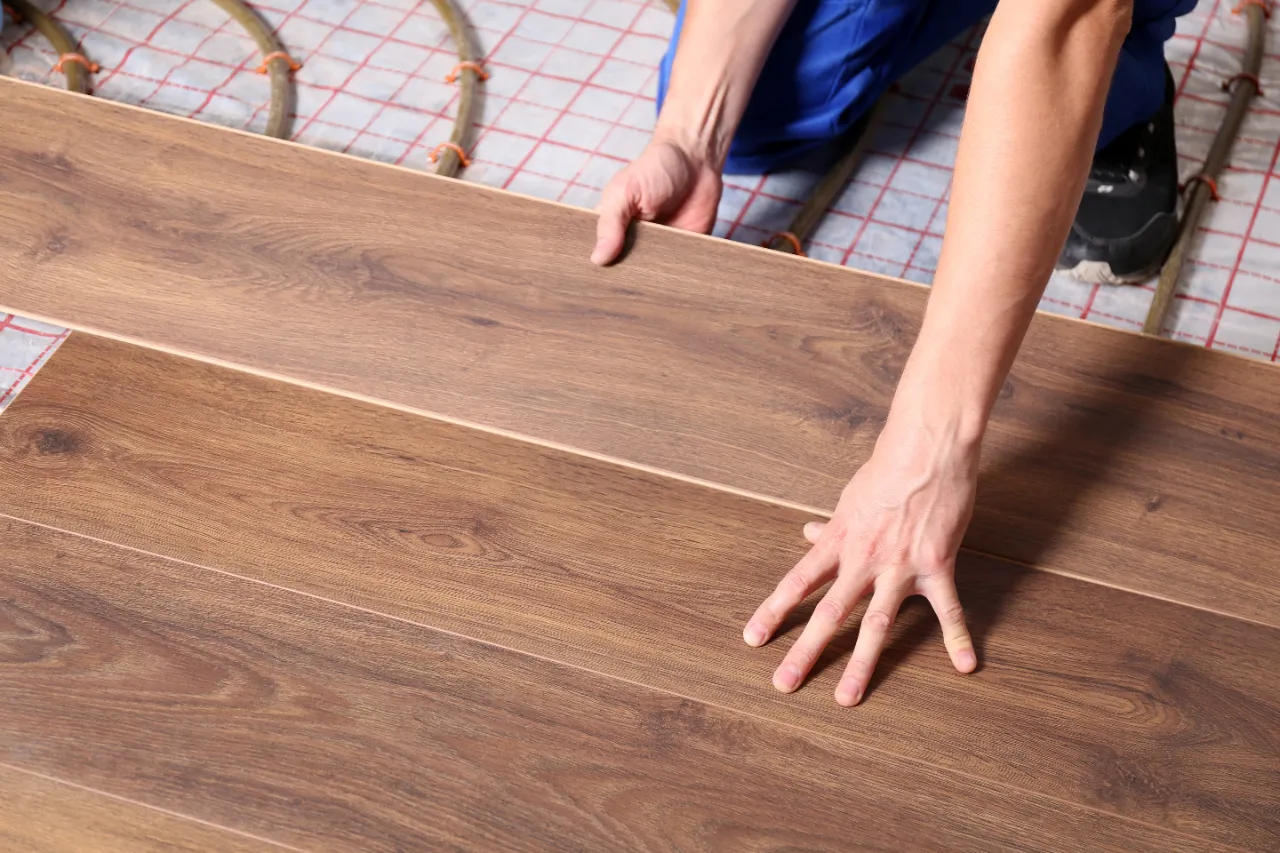
New laminate installation starts with subfloor inspection. Wood subfloors get checked for level, squeaks, and soft spots. We screw down loose plywood, plane high spots, and fill low spots with selfleveling compound where needed. The subfloor should sit flat within 3/16 of an inch over a 10 foot span. Bigger swings cause planks to flex and lock joints to fail. Concrete subfloors get tested for moisture before any underlayment goes down. High readings mean a vapor barrier is needed.
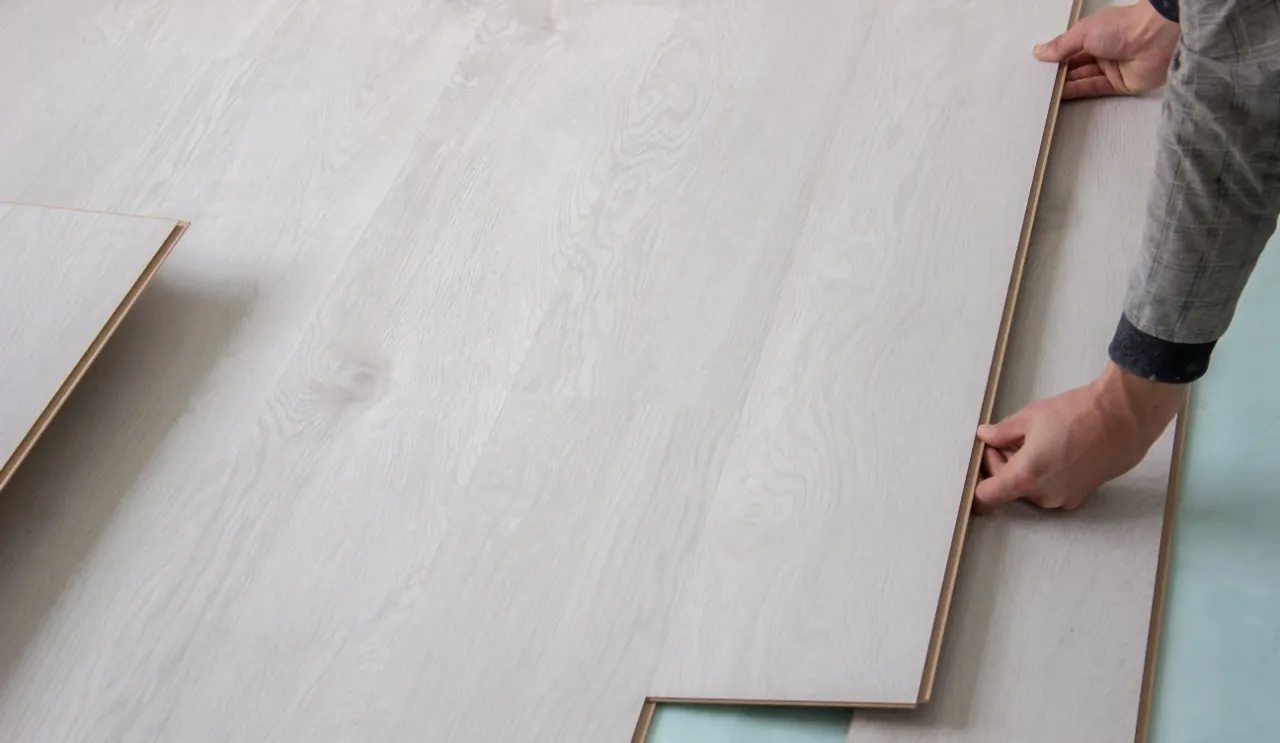
Underlayment goes down after the subfloor is ready. We use closed-cell foam with a vapor barrier on concrete slabs, and standard foam on wood subfloors. Seams of the underlayment get taped tight so moisture stays sealed below. The first row of planks runs along the longest wall, with the tongue side facing into the room. Wall spacers hold a 3/8 inch expansion gap so the floor can move with seasonal humidity. This gap is the most skipped step in bad installs.
Laminate Floor Replacement Process
Replacing an old laminate or other floor means dealing with the existing material first. Old laminate planks pull up dry without glue residue most of the time. Carpet and pad rip out fast but leave staples and tack strips behind that all have to come up. Vinyl sheet goods take longer because the adhesive can be stubborn. We remove the old floor down to the subfloor and dispose of the material as part of the job. The space is left clean for the next phase.
Subfloor repair often shows up during replacement work. Old leaks under refrigerators or dishwashers warp plywood. Pet stains rot wood subfloor in spots near doorways. We open up damaged sections and replace with new plywood that matches the existing thickness. The whole subfloor sands flat before any underlayment goes down. The new laminate then locks onto a level base, which is what makes the difference between a floor that lasts 15 years and a floor that lifts at seams in year two.
Replacement timeline runs slightly longer than new installs because of the demo phase. A single bedroom switch from carpet to laminate runs 1 to 2 days total. A first floor with living room, dining room, and hallway runs 3 to 5 days. Basement laminate over concrete runs 2 to 4 days depending on moisture prep needed. Baseboards either pull off carefully and reinstall, or stay in place with quarter round added at the wall. You decide which method on the walkthrough.
Why Flooring Quality Matters in Massachusetts
Laminate is a floating floor, which means every plank locks to every other plank with no nails or glue holding it to the subfloor. That design works well when the install is right and fails fast when the install is wrong. Skipped expansion gaps lock the floor against the wall and force it to buckle when humidity rises in summer. Massachusetts goes from 20 percent indoor humidity in February to 70 percent in August. A floor that cannot move will fail.
Subfloor flatness drives long-term floor performance more than the laminate brand or plank price. A 1/4 inch slope over 10 feet feels fine when you walk on it, but the plank locks open up over months of seasonal swing. Seams gap. Joints click and pop underfoot. The factory click system is rated for flat