
Professional Drop Ceiling Installation Services in Cambridge, MA
Cambridge drop ceiling installation projects work in Victorian basements, Greek Revival basements, modern condo storage areas, and lab or office commercial conversions. Each property type requires specific approach to grid layout, tile selection, and finish quality. Cambridge property values warrant higher-end products and careful installation during the project.
Cambridge drop ceiling installation needs no permits for standard residential basements. Lab or office conversions in East Cambridge may need permits depending on fire-rating, sprinkler integration, and use classification. We confirm permit requirements with the Cambridge inspectional services department before any commercial conversion project work begins on site.
Cambridge climate puts demands on basement drop ceilings. Charles River humidity in summer peaks at 75 percent. Winter heating dries indoor air sharply. We select tile materials and grid components rated for these conditions. Property value considerations also drive material selection because cheap tiles read as builder-grade and may affect resale value in this market.
Grid Layout and Planning in Cambridge
Drop ceiling layout in Cambridge starts with measuring the room and centering the grid. A centered grid means border tiles on opposite walls are equal width. Off-center grids look unprofessional and read as builder-grade work that affects resale value in Cambridge property market. We layout carefully during planning so the final result reads as professional finish work.
Grid layout in Cambridge Victorian basements addresses uneven walls common in 130-year-old stone foundations. Greek Revival basements have similar conditions. Walls vary by inches along single runs. We measure multiple points and design layout to look square visually even when walls are not perfectly square. Border tiles get scribed to wall variations during installation.
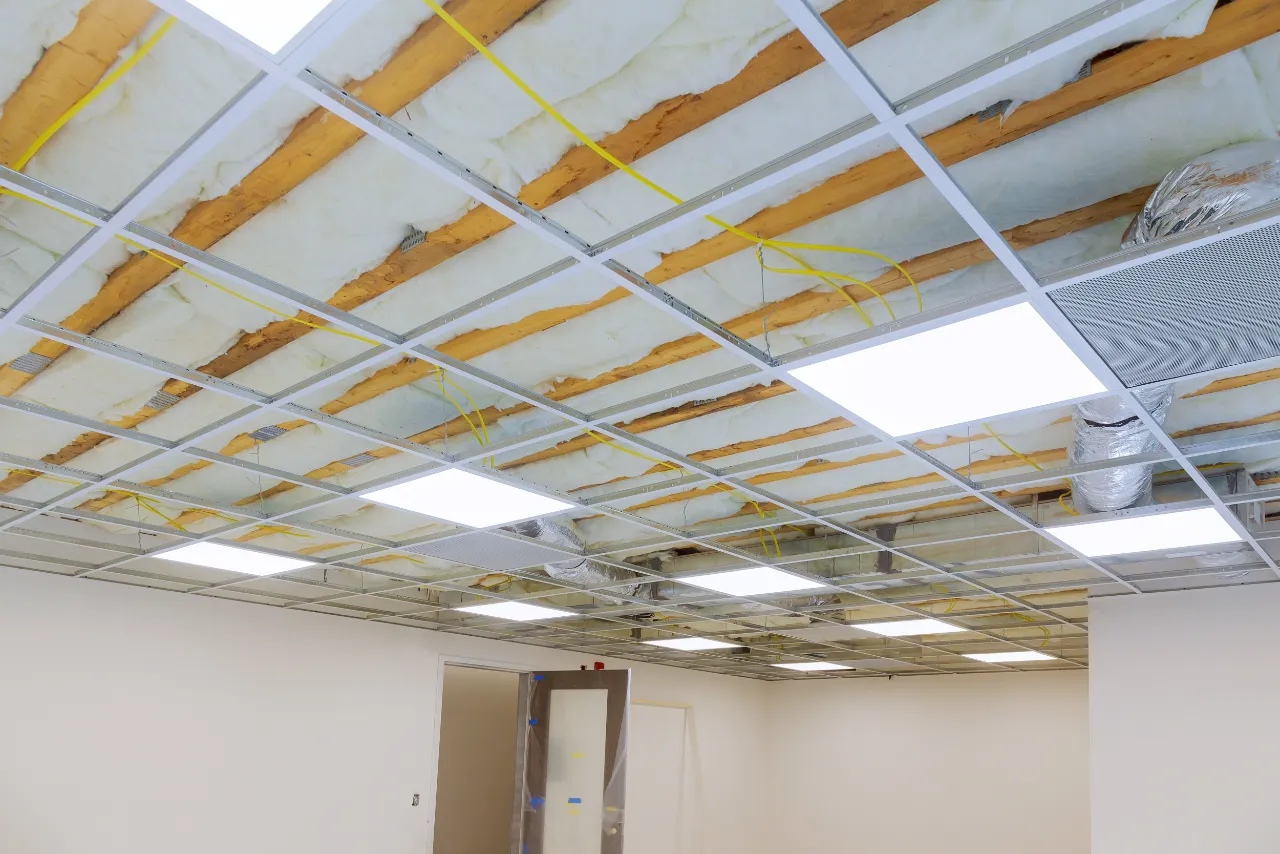
Lighting integration during Cambridge layout planning matters more than most homeowners realize. We coordinate lighting fixture locations with grid spacing so 2x2 or 2x4 panels fit cleanly into the grid. Recessed cans get planned for tile centers. Lab and office conversions may need specific lighting layouts coordinating with task lighting and acoustic tile requirements.
Tile Installation and Grid Suspension in Cambridge
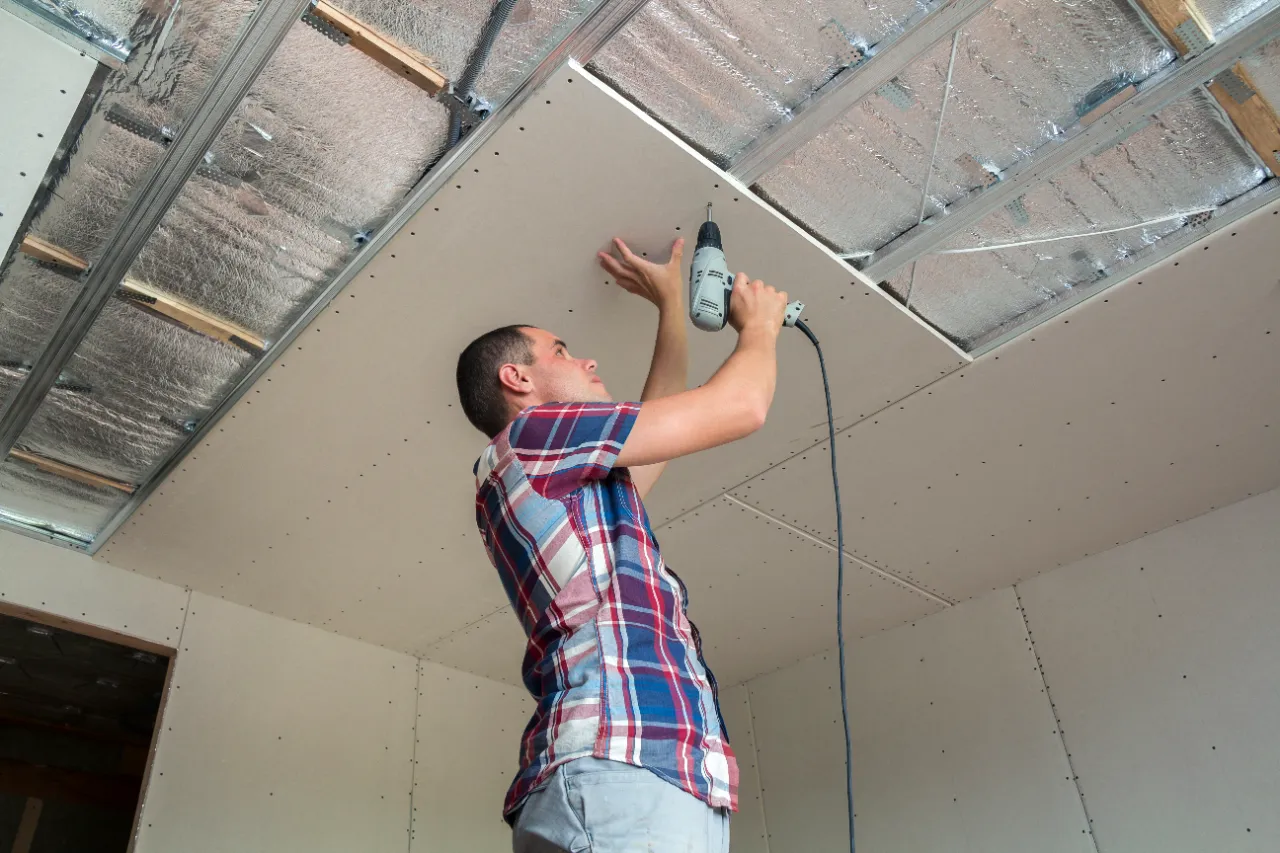
Drop ceiling installation in Cambridge follows the standard sequence with care for property value finish quality. Install wall angle perimeter at the ceiling height line. Hang main runners from hanger wires. Set cross tees at proper grid spacing. Drop tiles into the completed grid. Cut border tiles precisely with care for clean lines visible from below.
Tile selection in Cambridge favors property value market expectations. Higher-end Armstrong Cirrus or Ultima series tiles match Cambridge finished basements and converted spaces. Standard utility-grade tiles read as builder-grade and may affect resale value. Lab conversions may need washable, anti-microbial, or clean-room rated tiles depending on lab use classification.
Grid components matter for long-term Cambridge performance and property value preservation. Galvanized or painted steel grids work for residential. Higher-end aluminum grids may match property value market on premium projects. Hanger wire suspension at 4-foot spacing supports tile weight properly. Property value finish work requires attention to small details in installation quality.
Why Drop Ceiling Installation Quality Matters in Cambridge
Cambridge drop ceiling installation quality reflects the property value market. Buyers and home inspectors notice ceiling tile quality, grid alignment, and overall finish during transactions. We do the installation work properly because Cambridge homes warrant the investment in quality work that lasts decades rather than cheap installations that show wear within years.
Tile selection quality matters in Cambridge property value market. Higher-end Armstrong tiles match Cambridge expectations. Standard utility-grade tiles may affect resale value. Lab conversions need specialty tiles for use classification. We select tiles appropriate for property value, room use, and conditions rather than defaulting to cheapest options available in stock.
Bad Cambridge drop ceiling installation fails the property value market. Tiles sag and yellow within years. Grids look misaligned. Border cuts look amateur. Wrong tile selection reads as builder-grade and hurts resale value. We avoid these failures with appropriate materials, careful layout, and quality installation work at every project we complete in Cambridge.