Professional Laminate Flooring Installation Services in Springfield, MA
Springfield laminate flooring projects span Victorian foursquare wood plank subfloors, post-war ranch plywood subfloors, and tornado-rebuilt home modern plywood subfloors. Each housing type has different subfloor conditions and prep requirements. We assess existing subfloor during walkthrough so the quote matches actual project requirements in each Springfield home we visit for laminate installation.
Federal Renovation Repair and Painting rule applies to laminate installation on pre-1978 Springfield homes when prep work disturbs painted surfaces like baseboards. Our crew is EPA Lead-Safe Certified. Tornado-rebuilt Springfield homes from 2011 and later have no lead concerns. We confirm housing age during walkthrough so the right procedures apply on each project.
Connecticut River valley climate affects laminate flooring performance. Summer humidity above 70 percent expands the planks. Winter dry indoor air contracts them. We leave proper 1/4 inch expansion gaps at all walls and obstacles to handle the seasonal movement. Skipping expansion gaps causes plank buckling within a year of installation in Springfield conditions.
Subfloor Prep in Springfield
Subfloor assessment in Springfield starts with checking flatness. Laminate manufacturers require flatness within 3/16 inch over 10 feet. We use a 10-foot straightedge on Victorian wood plank subfloors, post-war ranch plywood, and tornado-rebuilt modern OSB subfloors. High spots get sanded. Low spots get filled with self-leveling compound or floor patch material before installation begins.
Subfloor repair handles loose boards, squeaks, and damaged sections common in Springfield Victorian homes. We screw down loose plank subfloor boards. Replace damaged sections with new plywood. Address squeaks by adding screws at joist locations. Tornado-rebuilt homes have flat subfloors needing minimal prep. Victorian and ranch homes typically need this prep before laminate installation.
Moisture testing on concrete subfloors uses calcium chloride or relative humidity test methods. Concrete must test below 4 lbs per 1000 sq ft per 24 hours moisture vapor emission for laminate. Above that, laminate swells and lifts. We test during walkthrough on basement installations and recommend luxury vinyl plank when moisture exceeds laminate tolerance for the project conditions.
Underlayment and Installation in Springfield
Underlayment installation in Springfield follows manufacturer specs. Roll out underlayment seam-to-seam without overlap. Tape seams with manufacturer-recommended tape. Standard 3mm foam with moisture barrier on basic projects. Premium cork underlayment in upper-floor installations or multi-family situations. Underlayment quality matters for sound, cushion, and moisture protection over years of use.
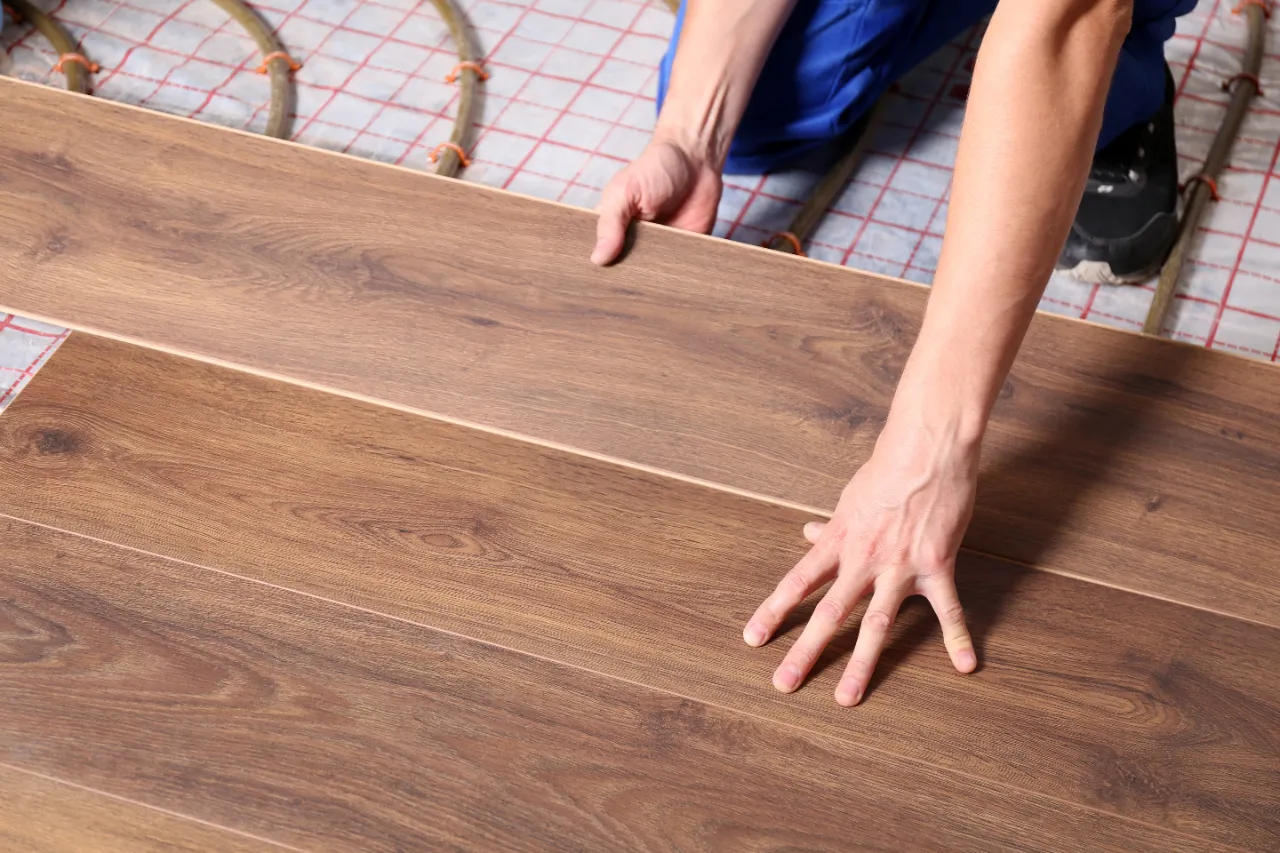
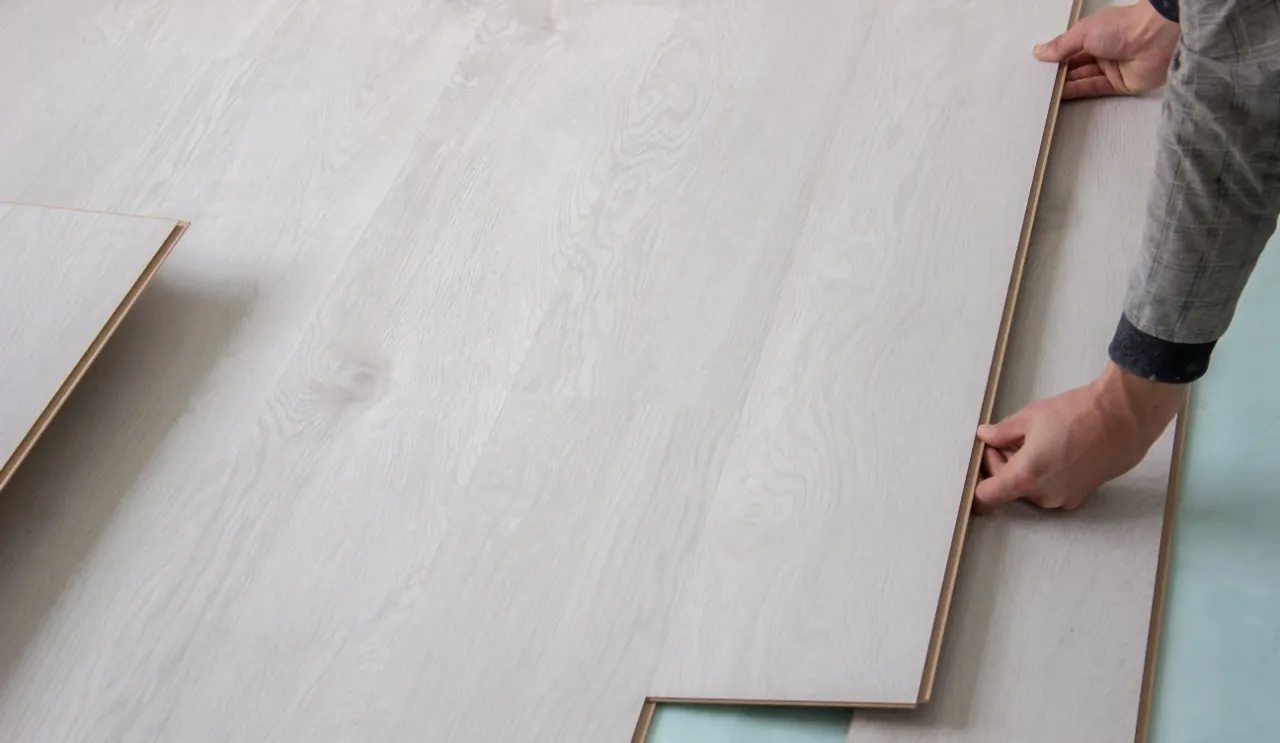
Laminate plank installation in Springfield follows the specific sequence. Lay first row along the longest straight wall with 1/4 inch expansion gap. Click-lock subsequent rows offsetting end joints by at least 12 inches. Tap planks tight using a tapping block and pull bar at row ends. Maintain expansion gaps at all walls and obstacles for the climate movement range over the seasons.
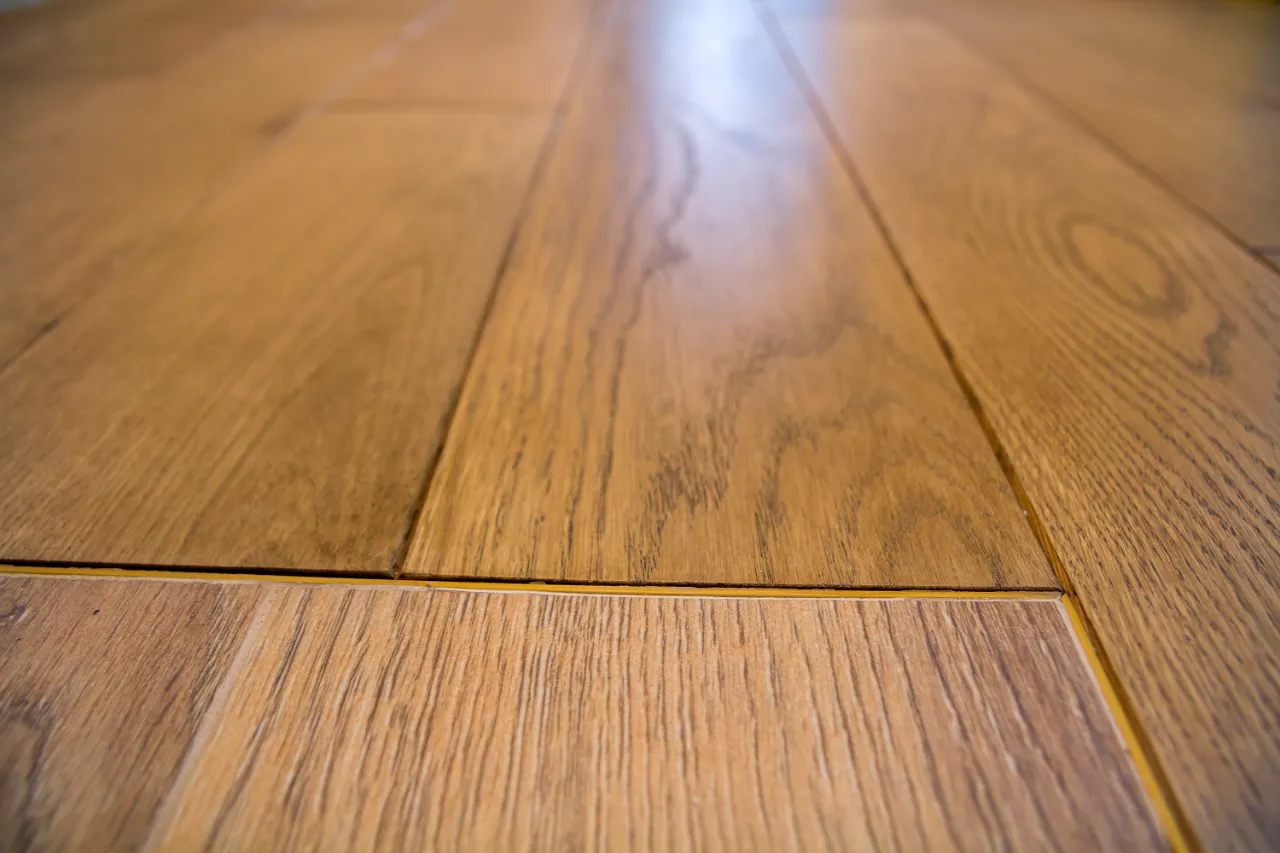
Trim and transition work completes the Springfield laminate install. Quarter round or shoe molding covers expansion gaps at walls. T-molding at doorway transitions. Reducers where laminate meets tile or lower flooring. End caps at exterior door thresholds. Stair nose pieces on any stairs. Clean transitions matter for a finished look that handles seasonal humidity without failing within years.
Why Laminate Flooring Quality Matters in Springfield
Springfield laminate quality depends on flat subfloors and proper expansion gaps. Uneven subfloors cause planks to flex on each step. No expansion gaps cause buckling in summer humidity. We check flatness with a 10-foot straightedge and leave 1/4 inch gaps at every wall and obstacle on every Springfield laminate project we complete in the city neighborhoods.
Laminate product selection in Springfield balances durability and budget. AC3 rated laminate works for residential traffic. AC4 holds up better in high-traffic areas like kitchens. Tornado-rebuilt homes accept standard AC3 well because of flat modern subfloors. Pet-friendly options resist scratching better than standard. We discuss ratings during walkthrough for each Springfield project.
Bad Springfield laminate fails predictably. Planks buckle in summer humidity because expansion gaps were skipped. Click-lock joints separate because subfloor was not flat. Underlayment compresses unevenly because cheap material was used. Victorian subfloors not properly prepped caused premature failure. We avoid these failures with proper prep and quality materials on every Springfield project.