Professional Drop Ceiling Installation in Massachusetts
A drop ceiling is the fastest way to finish a basement or commercial space and keep access to what runs above. Plumbing pipes, ductwork, and electrical lines stay reachable when something fails. Drywall ceilings lock everything in place. Drop ceilings give you a finished look and easy service access at the same time. We install 2x2 and 2x4 grid systems with acoustic, decorative, or moisture-rated tiles depending on the space and the look you want.
Carlos Maldonado walks the space before the quote goes out. He measures the room, checks the joist height, and looks at what runs above the proposed ceiling line. The written quote lists square footage, grid pattern, tile choice, recessed lighting, and any soffit work needed around ducts or beams. Materials come from Home Depot for standard ceiling tiles and grid components. Premium tiles can be special ordered if you want a textured, decorative, or sound-absorbing product.
Massachusetts basements drive most drop ceiling work in our service area. Older homes have 7 to 7 1/2 foot basement heights, which means every inch of grid drop matters for headroom. We measure the lowest pipe, duct, or beam first and set the grid line just below that. The result is a finished ceiling at the maximum possible height. Commercial offices in Massachusetts also use drop ceilings, usually 2x4 grids with standard acoustic tiles to handle sound and lighting fixtures.
New Drop Ceiling Installation
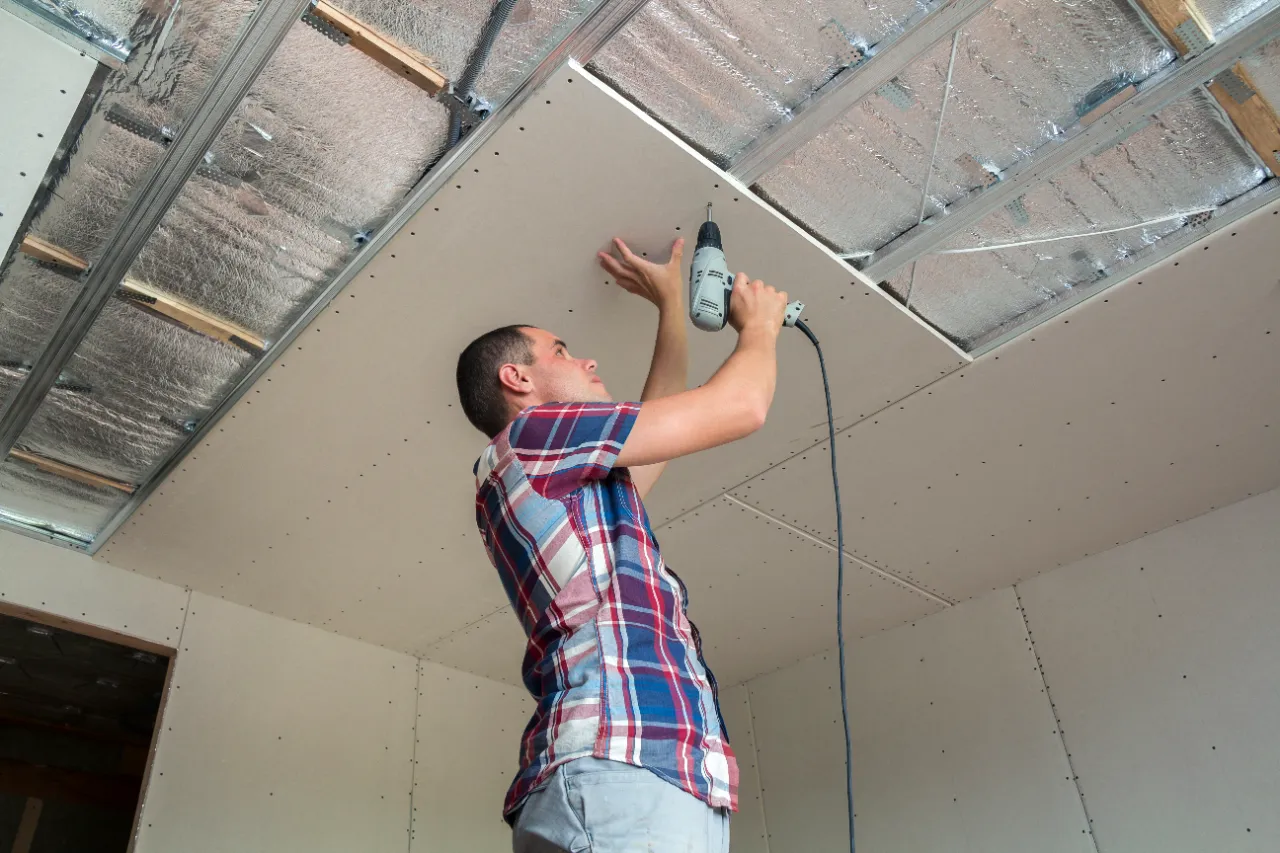
Installation starts with the perimeter wall angle. We snap a level chalk line on every wall at the planned ceiling height. The metal wall angle screws into studs along that line. This is the most critical step because every grid line below references the wall angle for level. A perimeter that is off by 1/4 of an inch from one wall to another shows up in every tile as a visible slope. We use a laser level to set the chalk line so all four walls match.
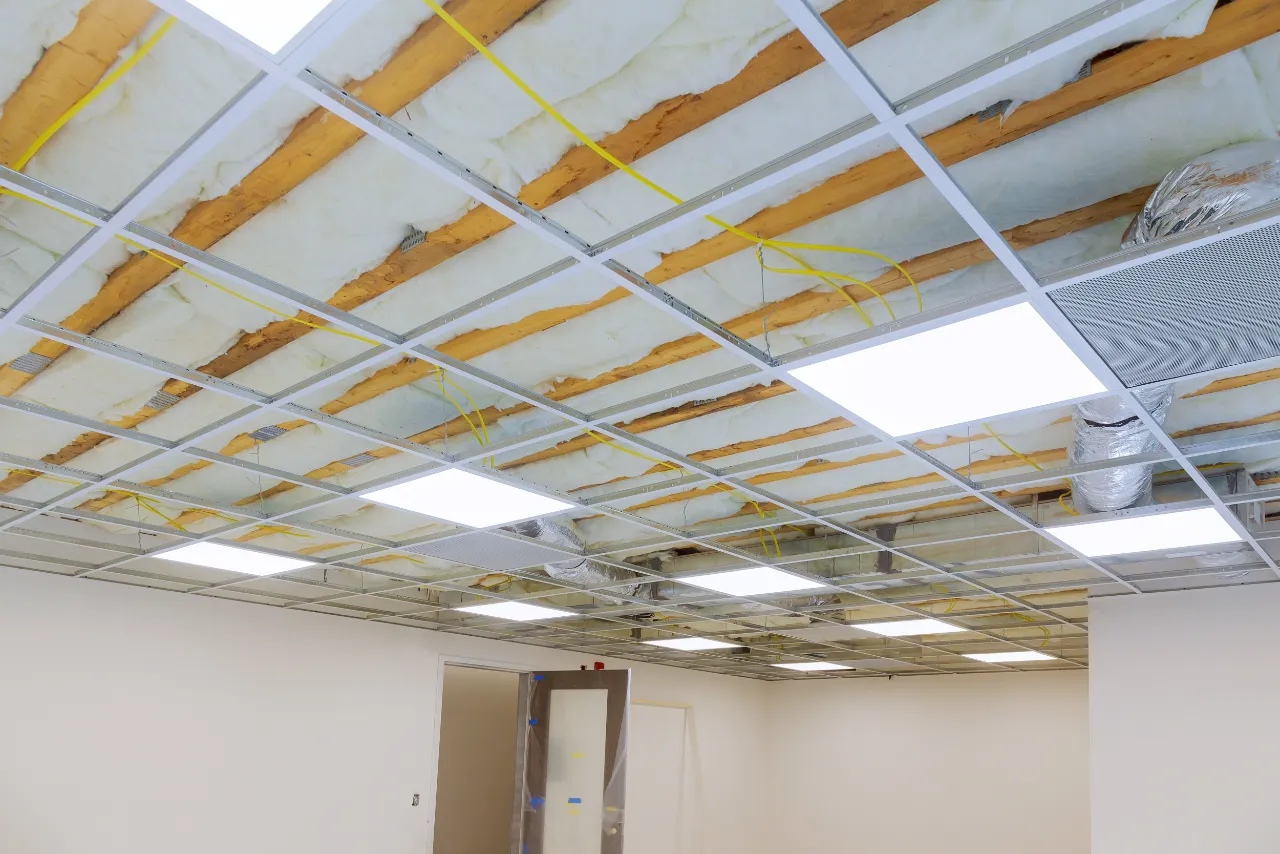
Main runners and cross tees go in after the wall angle is set. Main runners hang from suspension wires attached to the floor joists above. The wires drop down from the joists and connect to the runners at 4 foot intervals. Each wire gets adjusted so the grid sits perfectly level once tightened. Cross tees snap into the main runners at 2 foot or 4 foot intervals depending on the tile size. The grid layout is planned so the visible tiles in the room come out balanced.
Drop Ceiling Replacement and Tile Repair
Old drop ceilings often need only partial replacement, not a full tear-out. Stained tiles from a long-fixed roof leak swap out for new ones in minutes. Dented or broken tiles replace one at a time. Yellowed tiles from years of cigarette smoke get swapped to fresh white tiles, which brightens the whole room. We carry common 2x2 and 2x4 tile sizes on the truck for partial replacements. Less common tile patterns need ordering, with lead times of 1 to 3 weeks.
Full ceiling replacement makes sense when the existing grid is bent, rusted, or out of level. Older basement grids from the 1970s have often lost their square because of slow shifts in the joists above. Sagging grid lines pull tiles out of alignment. Tiles fall through every few months. We strip the old grid and wire down to the joists and rebuild from scratch. This way the new ceiling sits true and stays that way. Existing recessed lighting can stay in place if it still works.
Project timeline depends on size and condition. A standard basement family room of 200 to 300 square feet runs 1 to 2 days. A larger basement with multiple rooms runs 3 to 4 days. Commercial offices run faster per square foot because rooms are open with fewer beams and ducts to work around. Adding recessed lighting fixtures or sound-absorbing tiles adds a few hours. We schedule jobs to finish in a single visit when possible so the room is usable the next day.
Why Ceiling Quality Matters in Massachusetts
A poorly installed drop ceiling looks bad fast. Grid lines that are not square show up as crooked tile seams. Wall angles set off level make every tile slope visibly toward one corner. Suspension wires hung at the wrong spacing let the grid sag in the middle of long runs. We avoid these failures by working slowly on the perimeter setup. The wall angle and main runner placement determine how every tile sits. Get those two right and the rest of the install goes smoothly.
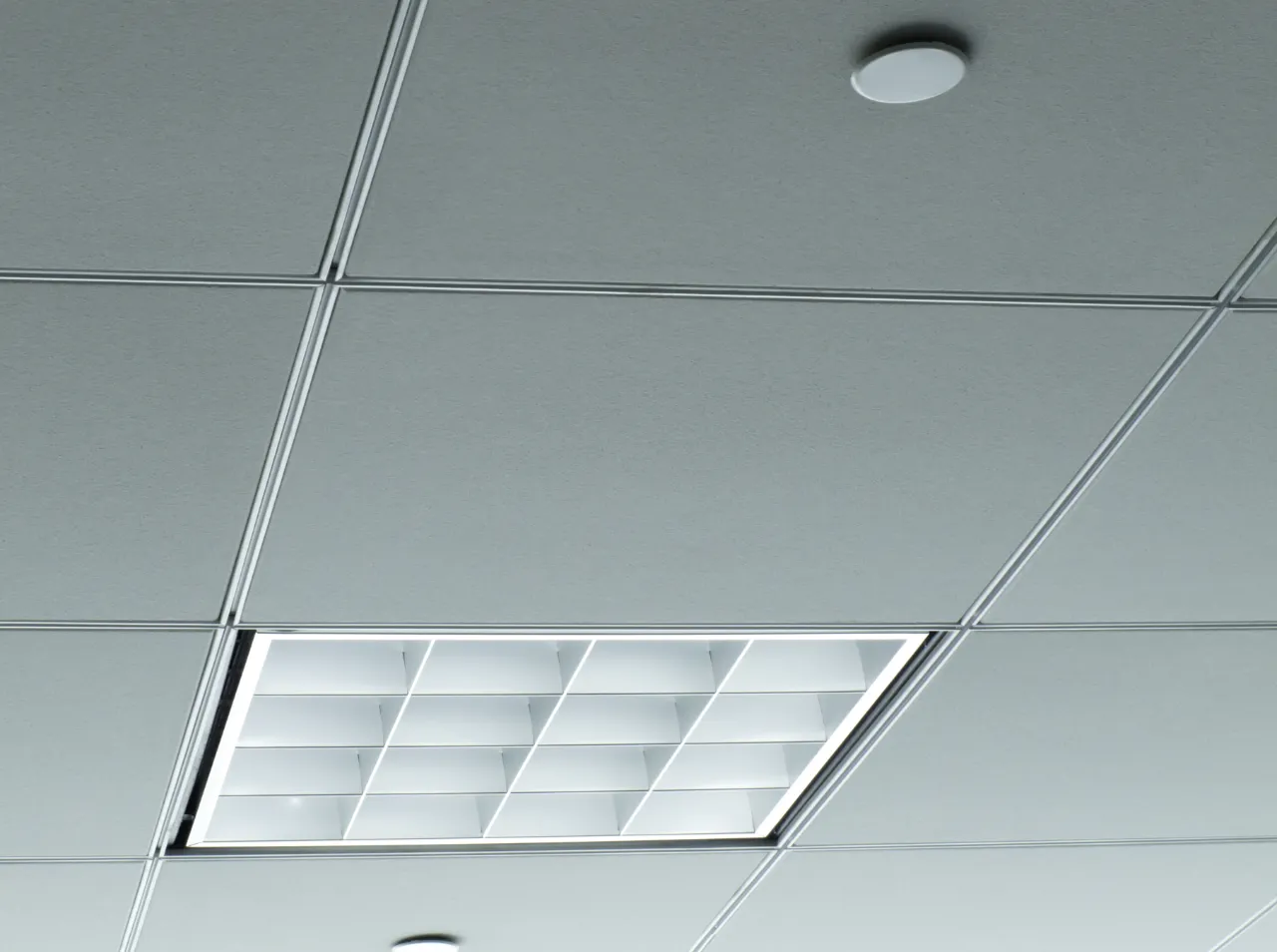
Tile choice drives how the ceiling looks and performs. Standard mineral fiber tiles are cheapest and work fine in most basement spaces. Vinyl-faced tiles handle moisture better and wipe clean for basements with humidity issues. Smooth or textured decorative tiles update the look of an older