Professional Kitchen Remodeling Services in Fall River, MA
Fall River kitchen remodels work in the highest density of triple-deckers in Massachusetts. Mill worker housing from 1890 through 1920 dominates the central neighborhoods. The Flint, Bank Street, Maplewood, Highlands, Globe, and South End areas each have their own mix of triple-deckers, single-family colonials, and post-war housing. Kitchen sizes in older mill housing run smaller than in most other Massachusetts cities.
Fall River Inspectional Services Department permits kitchen plumbing, gas, and electrical work. Historic mill districts have additional review for exterior changes. Interior kitchen work proceeds under standard residential permits. We pull permits early and coordinate inspections at rough-in and final. Fall River permit timelines align with most Bristol County municipalities.
Fall River sits in a wind corridor between Mount Hope Bay and inland hills. Cold ocean air rushes through kitchen exhaust vents on winter days, which affects how we size and install ventilation systems. Coastal humidity in summer pushes high. The temperature and humidity swings stress cabinet finishes, countertop substrates, and tile expansion accommodation every season of the year.
Kitchen Installation in Fall River
New kitchen installation in Fall River triple-deckers handles plumbing stack coordination on three stacked units. The vertical waste stack, supply riser, and gas line serve all three apartments. Rough-in work briefly affects water and gas service to other floors. We schedule shutoffs during workday hours and notify neighbors 48 hours in advance to keep tenant impact minimal during the project phase.
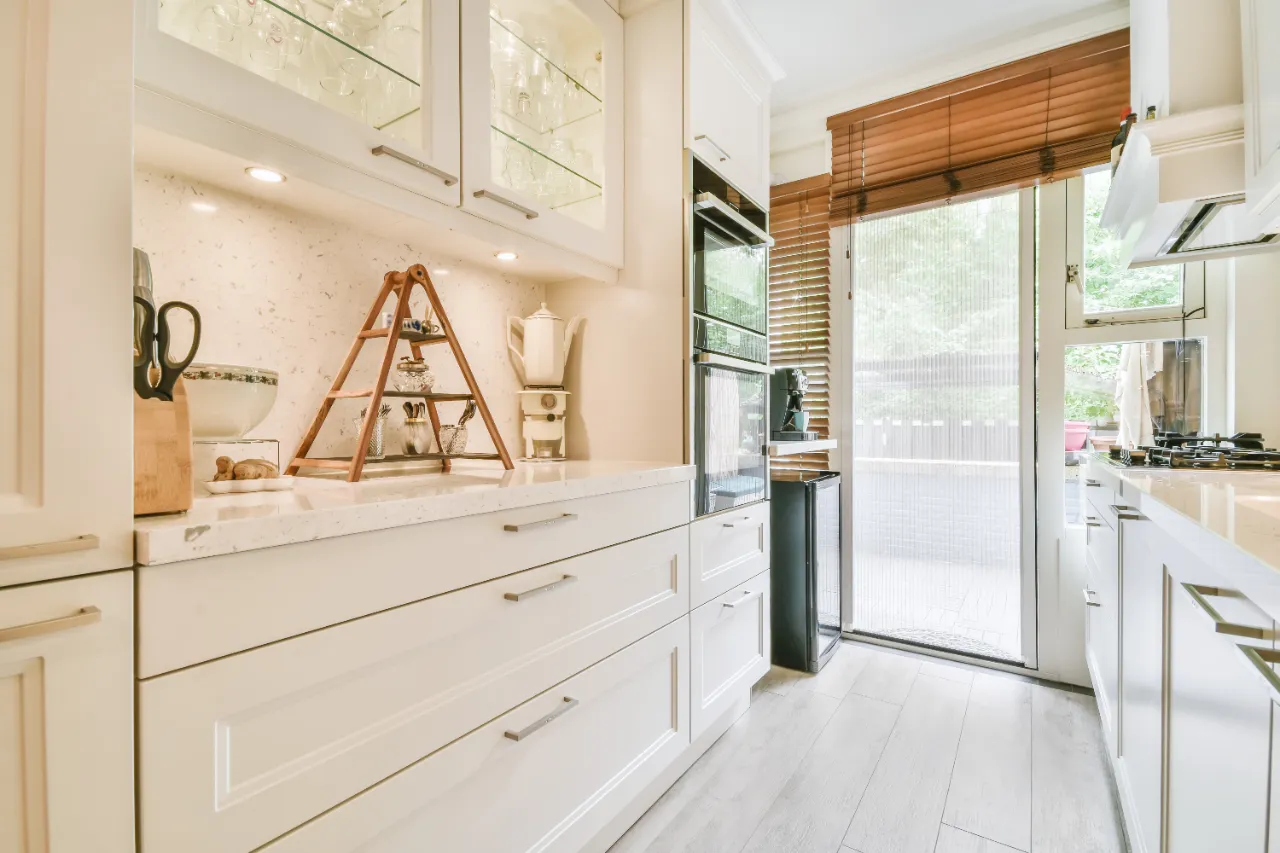
Fall River triple-decker kitchens run small. Many sit in 60 to 80 square foot footprints with galley or single-wall layouts. Cabinet selection focuses on slim profiles, counter-depth refrigerators, and appliance-garage solutions to maximize usable space. We design layouts that use every inch efficiently while still providing function for daily cooking and storage needs in these tight spaces.
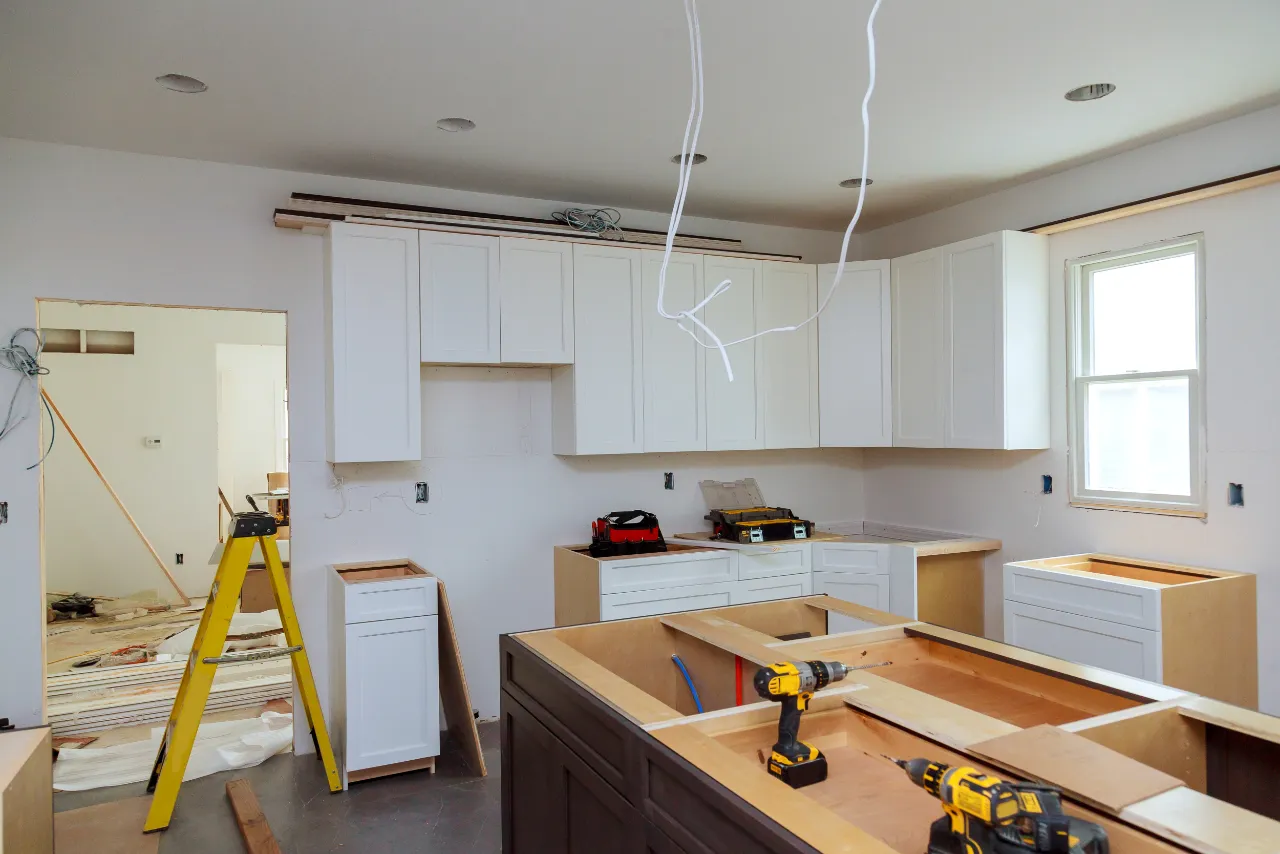
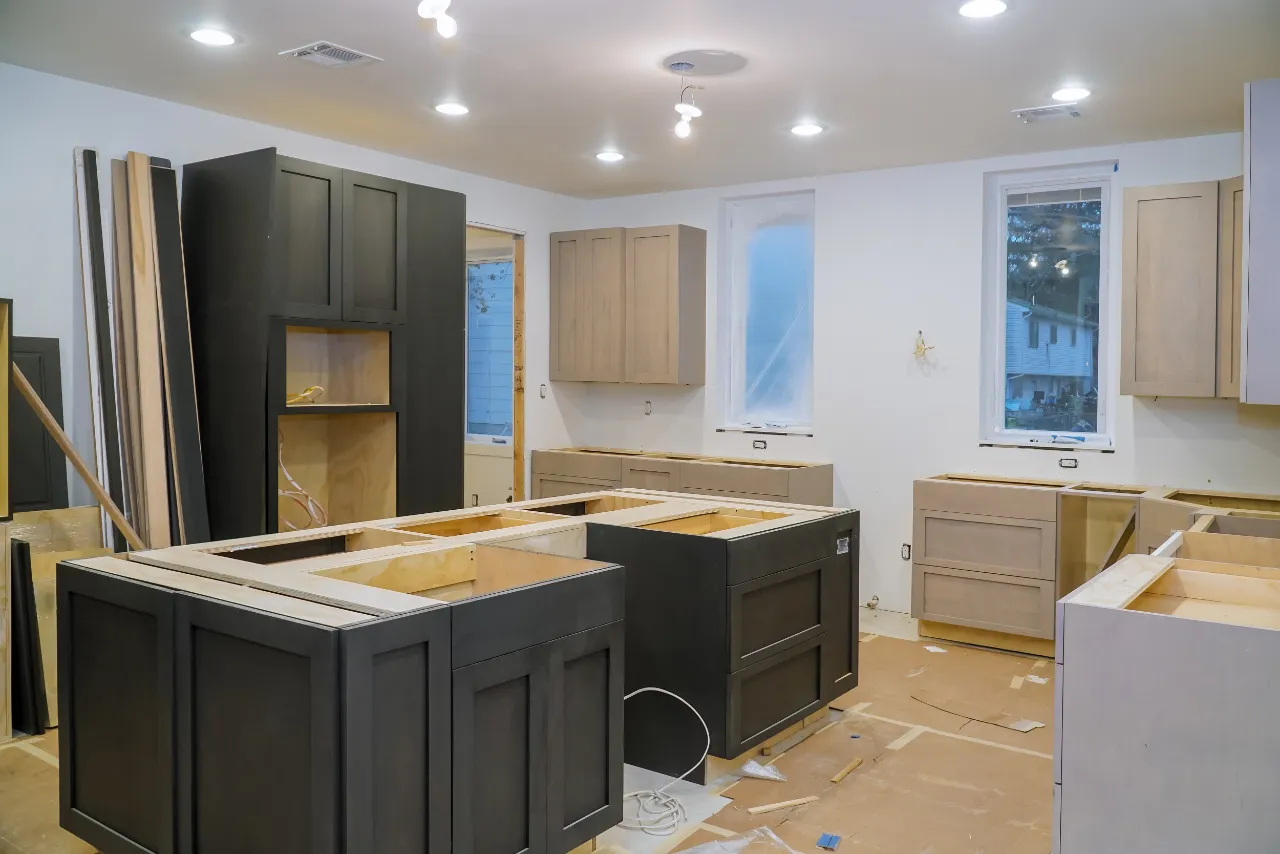
Cabinet installation in Fall River homes requires shimming because original floors slope from a century of settling. We level base cabinets with composite shims that hold under load over time. Uppers anchor into stud framing located with stud finders calibrated for the plaster-on-lath construction common in pre-1950 homes. Cabinets sit square even on sloped floors.
Kitchen Renovation Process in Fall River
Fall River kitchen renovations in pre-1920 mill housing frequently reveal multiple system issues at once. Cast-iron drain stacks near end of service. Galvanized water supply lines restricting flow. Knob-and-tube wiring still active near the kitchen. Black iron gas lines with corroded threads. We document each finding during early demo so the homeowner approves additional scope before we proceed with the systems updates.
Mill housing kitchen renovations in Flint, Bank Street, Globe, and the South End sometimes preserve original elements when feasible. Original tile floors from later renovations may survive. Period trim warrants careful demo to preserve adjacent rooms. We discuss preservation options during planning when the homeowner wants to maintain the historic character of the home.
Fall River kitchen renovation timelines run 8 to 12 weeks for standard residential work. Mill housing projects sometimes extend to 12 to 14 weeks because of the systems updates that almost always come with the scope. We plan the full timeline at the walkthrough so you know what to expect from contract signing through final walkthrough and closeout day.
Why Kitchen Quality Matters in Fall River
Fall River kitchen quality depends on handling the wind tunnel climate correctly. Range hood installation has to account for back-pressure from coastal winds during winter storms. Ductwork has to terminate properly outside the building. Materials have to handle the humidity and temperature swings. We design ventilation specifically for the conditions rather than using generic inland specs.
Fall River ISD inspections check the same statewide code points. GFCI placement near water sources. Dedicated circuits for major appliances. Gas line pressure testing. Range hood ducting outside the building envelope. Anti-tip brackets on freestanding ranges. We design scope to meet code on first inspection by planning to current standards from contract signing.
Bad Fall River kitchen jobs fail in predictable ways. Galvanized supply lines that should have been replaced corrode further and restrict flow. Cast-iron stack sections leak inside walls. Cabinet finishes degrade where moisture-resistant construction was not specified. Range hood components fail because of inadequate sizing for the coastal conditions. We avoid these failures by addressing systems during renovation.