
Why Your Bathroom Tile Is Cracking in Your Massachusetts Home
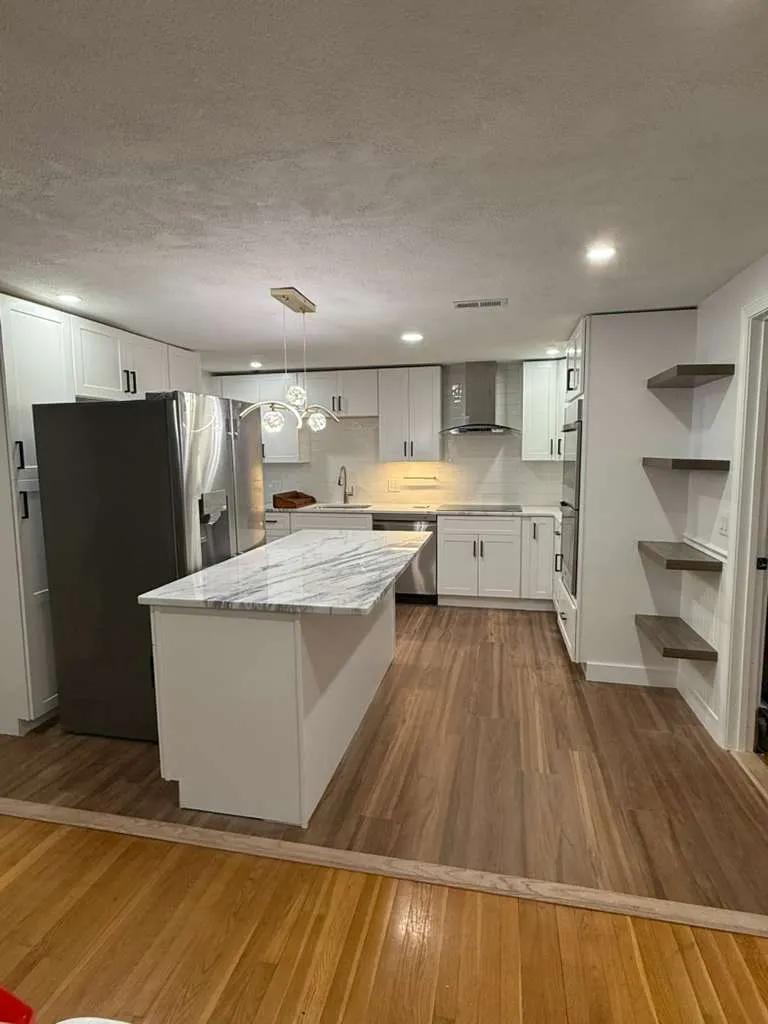
Bathroom tile cracking is one of the most common problems we see in Massachusetts homes. There is always a reason underneath, and figuring it out matters because just replacing the cracked tile will not fix the actual cause. Most Massachusetts bathroom tile cracking comes from one of four sources: subfloor movement, freeze-thaw stress, water damage, or installation shortcuts. Each cause needs a different fix.
Subfloor Movement Under Your Bathroom Tile
Subfloor movement is the number one cause of bathroom tile cracking in Massachusetts homes, especially in older triple-deckers and Victorians where floor joists have settled over 100 plus years. Tile is rigid. Wood subfloors flex. When the subfloor moves even a little bit under foot traffic, the tile above it has nowhere to go and cracks.
The fix is never just replacing the cracked tile. We have to address the subfloor first. That means removing the existing tile, checking joist spacing, adding a cement backer board over plywood, and sometimes adding sister joists for support. Skip this step and the new tile cracks again within a year. Worcester and Boston triple-deckers see this problem most often because of their age and original construction methods.
Freeze-Thaw Stress in Cold-Pocket Massachusetts Towns
Worcester, Springfield, and other cold-pocket Massachusetts towns hit subzero temperatures every winter. If your bathroom shares a wall with the exterior or sits over an unheated basement, the temperature swing stresses the tile and grout. Water that gets into hairline cracks during summer freezes in winter, expands, and makes the cracks bigger. Over a few winter cycles, hairlines become real cracks.
The fix is two-part. First, repair the existing cracks with proper crack-isolation membrane between subfloor and tile. Second, look at the bigger picture: is the bathroom insulated properly? A bathroom remodel in a cold-pocket Massachusetts home should include rigid foam insulation behind walls and heated tile floors when budget allows.
Water Damage Building Under the Tile
Water damage causes the tile to crack from below. A failed shower pan, missing caulk at the tub-tile joint, or a slow leak from a supply line lets water soak into the subfloor over months or years. The wood swells, rots, then shrinks unevenly as it dries. Tile sitting on that compromised subfloor cracks unpredictably.
You may not see the water damage until you remove the tile and find black subfloor staining or soft wood underneath. Proper repair means demo down to the subfloor, replacing damaged sections, addressing the leak source, and rebuilding with waterproofing membrane before new tile goes in. We use Schluter Kerdi systems on every Massachusetts bathroom remodel involving water issues.
Installation Shortcuts That Lead to Cracking
Sometimes the problem is just bad original installation. Tile set directly on plywood without backer board. Thinset mixed too dry or applied too thin. Expansion joints skipped at wall transitions. Tile installed before the subfloor had time to acclimate. Each of these shortcuts saves the installer time but causes tile to crack within 2 to 5 years.
The fix is proper demo and reinstallation with the right materials: cement backer board on subfloor, modified thinset, proper expansion joints at room perimeter, and quality tile rated for floor use. Cheap wall tile installed on bathroom floors cracks under normal foot traffic within a year or two.
Frequently Asked Questions
Hairline cracks in single tiles may be cosmetic. Cracks running along multiple tiles in a straight line indicate subfloor movement and need real repair. Cracks near the shower, tub, or toilet often signal water damage underneath and warrant immediate inspection before the problem spreads.
Sometimes yes, but only if the underlying cause has been addressed. Replacing one cracked tile on a moving subfloor means the new tile cracks within months. We always investigate the cause first during walkthrough, then quote either spot repair or full tile replacement based on what we find.
Recurring cracks in the same spot point to one of three things: an unsupported floor joist below, a slow leak in that area, or an expansion-contraction stress point at a wall transition. Each needs different repair. A proper walkthrough identifies which problem you have.
Spot repair for a single cracked tile runs $200 to $400 depending on tile matching difficulty. Full floor replacement with subfloor work runs $3,000 to $7,000 for a standard bathroom. Major water damage repair runs higher. We provide written estimates after walkthrough so you know the scope before any work begins.
Spot repair on one or two tiles runs 1 to 2 days including grout cure time. Full floor replacement with subfloor work runs 4 to 7 days. Bathrooms with water damage repair run longer because we need to dry damaged areas before rebuilding. We give you a realistic timeline before starting work.
Cracked bathroom tile rarely fixes itself. Get a real diagnosis from a Massachusetts contractor who looks at the cause, not just the surface.